Planning a Hot Tub or Spa: Concrete, Fiberglass and Everything Around It
A spa is a smaller project than a pool, but the same questions apply: what it's made of, where it goes and how you'll care for it.
October 17, 2026 · 4 min read
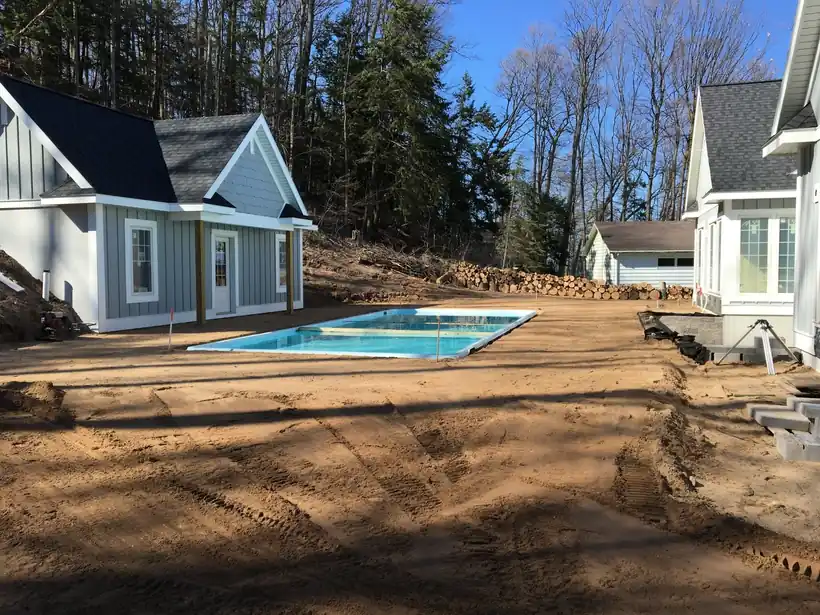
A hot tub sounds like an easy add to a yard, and in some ways it is, since it's smaller than a pool and the project is more contained. But it still needs a good spot, solid preparation and a plan for how you'll keep it clean and running. Poolside, Inc. installs concrete and fiberglass spas and hot tubs around Traverse City, and its spa page describes handling the excavation and preparation work before the installation itself. Here's what to think through before you start.
Concrete or fiberglass: two ways to build a spa
A fiberglass spa is a molded shell, built before it ever reaches your yard, much like a fiberglass pool. It's delivered, set in place and connected, and the surface is smooth and comfortable. The tradeoff is that you choose from the shapes and seating layouts the manufacturer makes. Poolside lists Qca Spas among its brands, so ask which models they'd suggest for your yard.
A concrete spa is formed and finished on site, so you can design the shape, the seating and the finish to suit your yard. It can even sit alongside a pool as a single connected feature. That freedom comes with a bigger build, and the finish you choose is part of the design. Poolside's spa page calls out both concrete and fiberglass spa services, so you can compare the two with the same company.
Choose the spot before you choose the spa
Where the spa goes matters as much as which spa you pick. Think about how you'll get to it in the cold, since in northern Michigan a hot tub gets used in winter. A short, clear path from the house is a big deal when it's snowing. Consider privacy, the view, wind exposure and where the snow slides off the roof. Also think about power and plumbing, because the spa's equipment needs electricity and the water needs to drain somewhere sensible.
Access matters during the install too. A fiberglass shell has to come in on a truck and be set into place, so the crew needs a path. Ask the installer to walk the yard with you before you commit to a location.
Excavation and site preparation
Whether the spa sits in the ground or above it, the base under it has to be right. An in-ground spa needs an excavation sized for the shell or the forms, and the ground underneath has to be prepared so the spa sits level and supported. A spa that's on a poor base can settle or crack, and a full spa is extremely heavy. Skimping here is the mistake that causes trouble years later.
Poolside's spa page says the company handles all the excavation and preparation services before the installation, which means the same crew digging the hole is the one setting the spa. In the gallery you can see small spa shells set in sand with the surrounding yard still untouched, which is what this stage looks like before the finishing work starts.
Decking, steps and surroundings
A spa needs somewhere to stand, sit and set a towel. Think about a deck or patio around it, steps or a ledge for getting in and out, and lighting for evening use. If the spa is near the house, think about how water, snow and ice will move around it. These details seem small, but they're what makes a spa pleasant to use every day instead of a hassle.
Equipment and maintenance supplies
Under the surface, a spa has a heater, pumps, filtration and often a sanitizing system, and each piece needs to be kept in good shape. Poolside's supplies and accessories page lists heating units, water pumps, filtration systems, lighting systems, chemical sanitizers and UV sanitizers, plus specialty hot tub and spa maintenance items. It also says Poolside is the only ProTeam dealer in the area, so parts and supplies can be handled close to home.
Spa water is small and hot, which makes it more sensitive than pool water. It needs regular testing, a sanitizer that fits the way you use it, and a filter that gets cleaned on a schedule. Ask the installer to show you how the system works before they leave, and ask what you'll need to keep on hand.
Questions to ask before you commit
- Which type fits my yard and how I'll use it: concrete or fiberglass?
- What preparation does the site need, and who handles it?
- What power, drainage and access does the install require?
- What equipment comes with it, and what maintenance will it need from me?
- What warranty applies, and what does it cover?
On warranties, Poolside's site mentions hot tubs and spas installed with a warranty, so ask about the specific terms when you call instead of assuming. The same goes for pricing: it isn't published, and it depends on the spa, the site and what you add around it.
Start the conversation
A spa is a smaller commitment than a pool, but it's worth planning well. Call Poolside at (231) 943-7061 or book a free consultation, and ask to talk through your yard, the type of spa and the supplies you'll need. You can read more about their spa work on the /spa-services page.
Poolside, Inc., (231) 943-7061
Call (231) 943-7061More articles
Fiberglass, Vinyl or Concrete: Choosing a Pool for a Northern Michigan Yard
Every pool conversation comes back to what the pool is made of, so here is how the three main types differ before you sit down with a builder.
From First Dig to First Swim: How a New Pool Gets Installed
A new pool looks like a mess for a while before it looks like a pool, so here is the order of work and why each step matters.