Fiberglass, Vinyl or Concrete: Choosing a Pool for a Northern Michigan Yard
Every pool conversation comes back to what the pool is made of, so here is how the three main types differ before you sit down with a builder.
October 17, 2026 · 4 min read
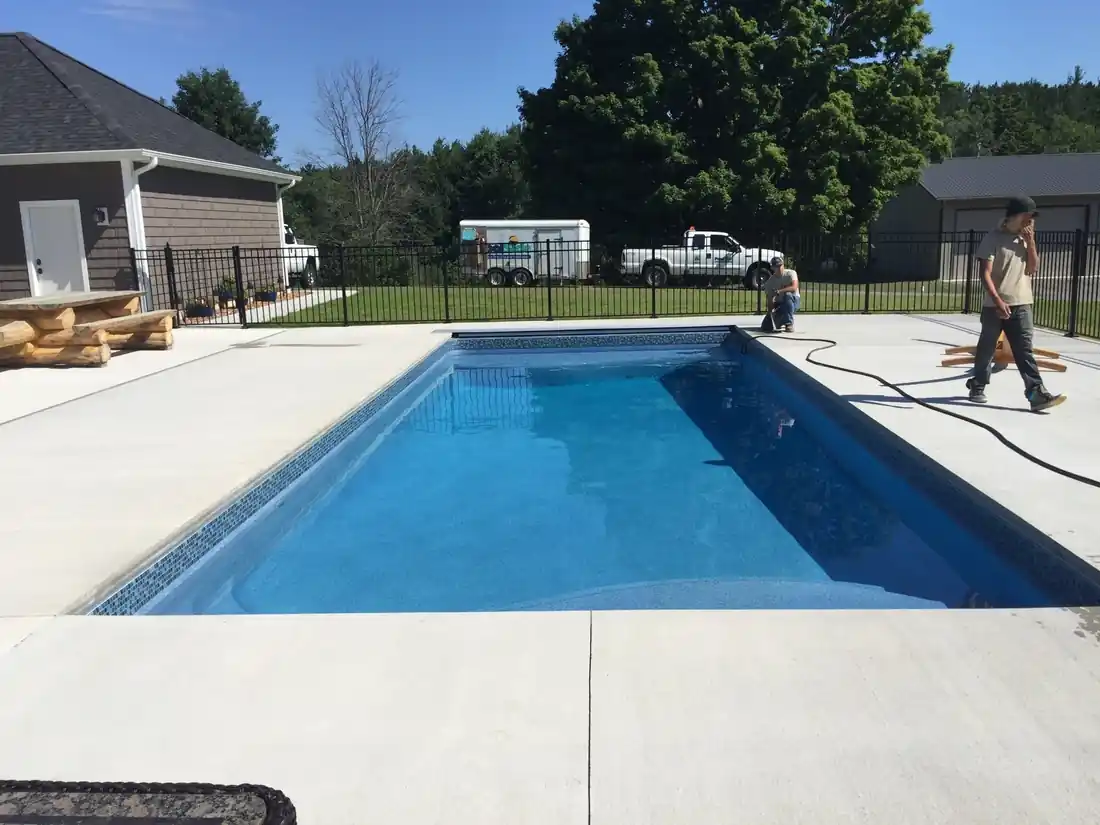
Sooner or later every pool conversation around Traverse City lands on the same question: what is the thing actually made of? The answer decides how the pool gets built, what it looks like in your yard, and what it asks of you in the years after. Poolside, Inc. has been installing pools in this area since 2000, and the lineup covers all three main types: fiberglass from Viking and Latham, vinyl and stainless steel from Fort Wayne, and custom concrete. Here's how they differ in general terms, so you can walk into a consultation with better questions.
Fiberglass: a shell built before it reaches your yard
A fiberglass pool arrives as one molded shell. It's made indoors, trucked to your property, and lowered into the excavation, usually by crane. Because the shape is already formed, much less of the pool gets built in your backyard, and the surface comes out smooth. Many owners like that smooth feel underfoot, and it's easy to wipe down and keep clean.
The tradeoff is choice of shape. You can pick from what the manufacturer molds, and the shell has to physically fit on a truck and reach the spot where it will sit. Poolside's Viking Fiberglass Pools page describes free-form, classic or custom fiberglass pools sized and styled to suit your landscape, and Latham fiberglass is part of what they install too. If you like one of the shapes on offer, fiberglass is a straightforward path. If you need something outside the catalog, keep reading.
Vinyl liner: the flexible-shape option
A vinyl liner pool starts with a wall structure assembled on a prepared base, then a custom-fit liner is set inside to hold the water. Poolside installs the Fort Wayne line, including the Elite Poly Pool and the Sterling Steel Pool. Their page describes customizable vinyl and stainless steel pools, with options like waterfalls, unique deck designs and grottos.
Since the walls are assembled on site, a vinyl pool gives you more freedom with size and outline than a molded shell does. It also means the liner is the surface you're swimming against, and a liner doesn't last forever. Like any liner, it eventually wears and gets replaced, and sharp objects or rough handling shorten its life. That's not a reason to rule it out, only a reason to ask the builder what liner care looks like over time.
Custom concrete: built to your drawing
Concrete is formed and finished right in your yard, so the pool can take nearly any shape, depth or detail you can sketch. Poolside's custom concrete page says they've built these pools to specification since the year 2000 and take care of the entire process, from excavation and installation to flat work and filtration systems. They build the pool deck as well, which means one crew answers for the whole project.
Because so much is built on site, concrete is the most involved of the three, and the finish you choose matters as much as the structure. Surfaces on concrete pools eventually need attention, so ask what the finish is and what upkeep to expect. For a yard with an odd lot, a view you want to frame, or a design that won't fit a stock shape, concrete is often where the conversation ends up.
Look at the yard before you pick the material
The material is only half the decision. The other half is your property. A crane and a delivery truck need room to work, so access to the backyard matters for a fiberglass shell. Slope, trees, a lake view and where the house sits all shape which pool belongs there. Winters here are hard on anything outdoors, so ask any builder how the pool, its plumbing and its deck are prepared for the cold months.
It's also worth thinking about what you want around the water. A patio, a gazebo, a slide, a stone feature or a stamped concrete deck all change the budget and the layout, and they're far easier to plan before the first dig than after. Poolside handles excavation, property preparation and the deck work in-house, so you can talk about the pool and everything around it in one conversation.
Questions worth bringing to a consultation
- How will the shell, wall panels or forms get to my backyard, and what access do you need?
- What will the surface need from me over the years, and what does it cost to maintain?
- What can I add later, such as a deck, lighting or water features, without redoing the work?
- Who builds the deck and sets up the filtration, and is that the same crew as the pool?
- What financing options are available for the project?
On that last question, Poolside points customers to financing through LightStream, and says to ask about affordable options when you call. They don't publish prices, which is normal for custom work, because the real number depends on the pool, the yard and everything you add.
Start with the free consultation
Poolside offers a free in-house consultation and an information packet of your options, so you can compare fiberglass, vinyl and concrete on your own property instead of in the abstract. If you'd like to read more about the fiberglass side first, the details are on the /viking-fiberglass-pools page. When you're ready to talk, call (231) 943-7061 or book a free consultation, and bring a few photos of your yard and a rough idea of how you'd like to use the pool.
Poolside, Inc., (231) 943-7061
Call (231) 943-7061More articles
From First Dig to First Swim: How a New Pool Gets Installed
A new pool looks like a mess for a while before it looks like a pool, so here is the order of work and why each step matters.
Closing Your Pool Before a Traverse City Winter
A good closing in the fall makes opening day in spring far easier, and the details are worth getting right.