Keeping Pool Water Balanced After a New Install
Pool chemistry is less mysterious than it looks, and a new owner who understands a few basics saves a lot of frustration.
October 17, 2026 · 4 min read
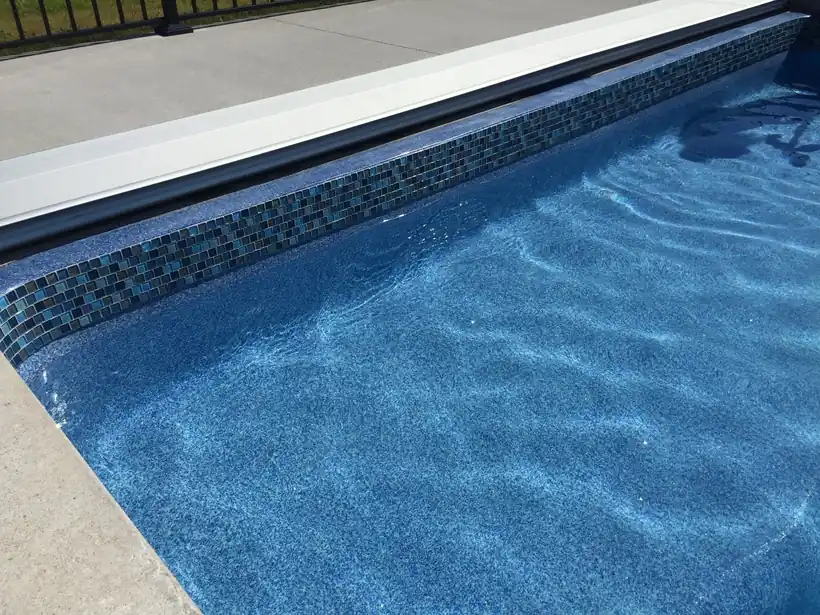
A new pool is exciting for about a week. Then the water looks a little cloudy, the test strip shows a color you don't recognize, and suddenly you're reading the back of a chemical bottle at nine at night. It happens to nearly every new owner. The good news is that water balance comes down to a handful of ideas, and once you understand them the routine gets easy. Here's a plain explanation, plus where to get help when the numbers don't make sense.
Sanitizer: the part that keeps the water safe
Sanitizer is what keeps bacteria and algae from taking over the water. For most pools that means chlorine in some form. Chlorine gets used up as it works, in sunlight and with swimmers in the water, so it has to be tested and replaced regularly. Too little and the water turns cloudy or green. Too much is hard on skin, eyes and equipment.
Saltwater pools use the same idea in a different way. A salt system has a cell that makes chlorine from the salt dissolved in the water, so you aren't adding chlorine by hand the same way. The pool still needs testing, and the salt cell needs occasional attention, but the daily routine is different. One Google reviewer of Poolside, who had them install an indoor, in-ground saltwater pool, wrote that she still called for help with chemicals after everything was finished, which tells you even a good system takes some learning.
pH: the number that makes everything else work
pH tells you how acidic or basic the water is, and it affects almost everything. When the pH drifts too far in either direction, sanitizer stops doing its job well, swimmers feel it in their eyes and skin, and equipment and surfaces can be affected over time. If your water won't behave and the sanitizer level looks fine, check the pH first.
Alkalinity: the buffer behind pH
Total alkalinity is a measure of how well the water resists swings in pH. If it's too low, the pH bounces around and is hard to hold steady. If it's too high, the pH tends to creep upward and resist correction. Alkalinity usually gets adjusted before the pH, because getting this buffer right makes everything downstream easier.
A simple routine for a new pool
- Test the water on a regular schedule, and test again after heavy use, big storms or a lot of added water.
- Adjust one thing at a time and let the pump circulate before you test again.
- Keep the filter and baskets clean, because circulation is what spreads the chemicals around.
- Write down your readings, so a pattern shows up before a problem does.
Test strips are fine for quick checks, but a drop test kit or a store test gives a more reliable read. Some owners bring a water sample to a pool store every so often as a cross-check.
UV sanitizers and where they fit
A UV sanitizer is an add-on that treats water as it moves through the equipment, using ultraviolet light to deal with what's in it. It works alongside your normal sanitizer, not instead of it, and how much it changes your routine depends on the pool and the system. Delta UV is one of the brands Poolside lists, and UV sanitizers appear on its supplies and accessories page. If you're curious whether one makes sense for your pool, ask the service team how it would work with your equipment.
Why the walk-through matters
Reading about chemistry only goes so far. The real learning happens when someone stands at your pool, shows you your equipment, tests your water and explains what each reading means for your pool in particular. A good builder or service company will do that.
Reviewers describe Poolside's service manager, Curtis, doing just that. One new pool owner wrote that when she called for help with chemicals, Curtis came out, walked her through them and checked on her several times over the next few weeks to make sure she was on track. Another wrote that he goes above and beyond to make sure customers understand how their pool works. You can read those reviews yourself on Google and on the company's own site. Of course, every pool and owner is different, but it's worth asking any company you hire whether a walk-through is part of the deal.
When the water goes wrong anyway
Even careful owners get cloudy water now and then. Heavy rain, a hot week, a party in the pool or a filter that needs cleaning can all throw things off. Before adding more chemicals, check the basics: is the pump running, is the filter clean, are the baskets empty, and what do the test results say? If you've done all that and the water still won't clear, a service visit costs less than a long string of guesses and half-empty bottles. Poolside lists equipment evaluation and chemical balancing among its services, and reviewers mention that the team looks over the whole system and catches minor issues before they become big ones.
Get help early
If your new pool's water isn't behaving, or you simply want someone to go over the basics with you, call Poolside at (231) 943-7061. For sanitizers, UV systems and testing supplies, take a look at the /supplies-and-accessories page, and if you're still planning a pool, ask about balancing and equipment when you book your free consultation.
Poolside, Inc., (231) 943-7061
Call (231) 943-7061More articles
Fiberglass, Vinyl or Concrete: Choosing a Pool for a Northern Michigan Yard
Every pool conversation comes back to what the pool is made of, so here is how the three main types differ before you sit down with a builder.
From First Dig to First Swim: How a New Pool Gets Installed
A new pool looks like a mess for a while before it looks like a pool, so here is the order of work and why each step matters.