Closing Your Pool Before a Traverse City Winter
A good closing in the fall makes opening day in spring far easier, and the details are worth getting right.
October 17, 2026 · 4 min read
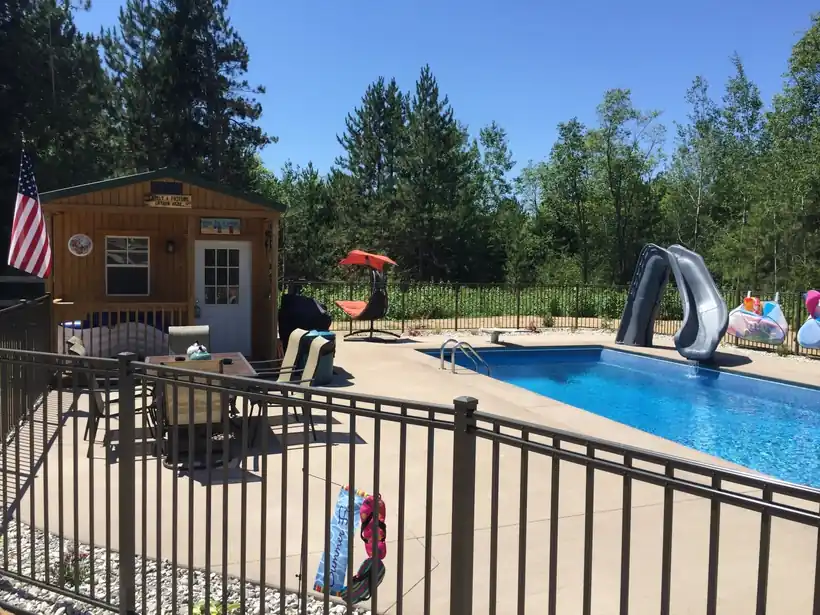
Pool owners in northern Michigan learn quickly that closing isn't optional. Water freezes, ice expands, and a pool that's put away carelessly can come out of winter with damaged plumbing, a stained surface or a green mess that takes weeks to fix. A careful closing doesn't have to be complicated, but it does have to be done in the right order. Here's how the work generally goes, what to think about with covers, and where a professional is worth the call.
Start with clean, balanced water
The water you close with is the water you open with, so closing is not the time for shortcuts. Before anything else, clean the pool: skim the surface, vacuum the floor, brush the walls and empty the baskets. Debris left behind breaks down over winter and feeds stains and algae.
Then test and balance the water. The pH, the alkalinity and the sanitizer level should all be where they belong, and most closings include a winterizing treatment added to the water to help it stay in good shape under the cover. If you've never been sure what your test results mean, closing is a good time to ask someone to show you. Poolside lists chemical balancing among its services and sells chemical sanitizers, so it's a conversation you can have in one place.
Lower the water to the right level
Most pools need the water brought down to a specific level before winter, so the plumbing at the top of the pool isn't sitting in water that can freeze. The right level depends on the pool and on the cover you use, which is the main reason to follow your own pool's instructions or ask the service team instead of guessing.
One thing to avoid: don't empty the whole pool unless a professional tells you to. Groundwater can push against an empty shell or liner, and the wrong move can damage the pool far more than any winter would.
Clear the lines and protect the equipment
Water left inside pipes is what causes burst plumbing. Closing means getting that water out of the lines, usually by blowing them clear with air, and then plugging the openings so the lines stay protected under the cover. Skimmers, returns and any other fittings are dealt with at the same time, and some call for specific winter plugs or fittings.
The equipment needs attention too. The pump, filter, heater and sanitizing equipment all hold water that can freeze, so they get drained and, depending on the model, stored or protected. Owners with salt systems or UV sanitizers should also check the manufacturer's guidance for winter, since those parts aren't all handled the same way. This is where closing gets less friendly for a first-timer, and where a lot of owners decide to hand it off.
Choosing and installing the cover
The cover keeps debris out, blocks sunlight and holds the pool steady through the cold. There are a few kinds, and they behave very differently.
- A standard winter cover sits on or over the water and keeps leaves and dirt out, but it isn't built to carry weight.
- A safety cover is anchored into the deck and is designed to keep people and pets from falling in.
- A hardtop safety cover is a rigid cover that sits over the pool, and Poolside's supplies page lists hardtop safety covers among the products it carries.
If you have children, pets or visitors around your yard, think about a safety cover rather than one that only keeps leaves out. A pool under a loose cover can look like solid ground, and that's a real hazard. Whatever cover you pick, it needs to be installed correctly and kept free of standing water and debris through the winter.
Check in during the cold months
Closing doesn't end the job. Look at the cover after heavy snow or a thaw, and clear anything sitting on it that shouldn't be there. If something looks off, such as a sagging cover, a leak or water where it shouldn't be, call someone early. Small problems in winter are much easier to deal with than the same problems in spring.
When to call the service team
Plenty of owners close their own pool, and plenty don't. The right choice depends on your pool type, your equipment and how comfortable you are with chemistry and plumbing. Poolside, Inc. offers pool closing as part of its service work, and reviewers on its site mention it. One customer wrote that she was happy to meet Curtis at her pool closing and that he did a great job closing it. That's one person's experience, but it gives you an idea of how the service team works with owners.
If you're not sure about the water level, the line blowing or which cover suits your pool, call before you start. It costs much less to ask first than to fix a frozen line later. There's more about their work on the /pool-service-and-repair page.
Make the call early in the fall
Closing goes best when it isn't rushed. Call Poolside at (231) 943-7061 to talk through what your pool needs, or book a free consultation if you're also thinking about a cover, new equipment or changes before next season.
Poolside, Inc., (231) 943-7061
Call (231) 943-7061More articles
Fiberglass, Vinyl or Concrete: Choosing a Pool for a Northern Michigan Yard
Every pool conversation comes back to what the pool is made of, so here is how the three main types differ before you sit down with a builder.
From First Dig to First Swim: How a New Pool Gets Installed
A new pool looks like a mess for a while before it looks like a pool, so here is the order of work and why each step matters.